

Physical AI in Practice: Bringing Healthcare’s Realities Into Focus
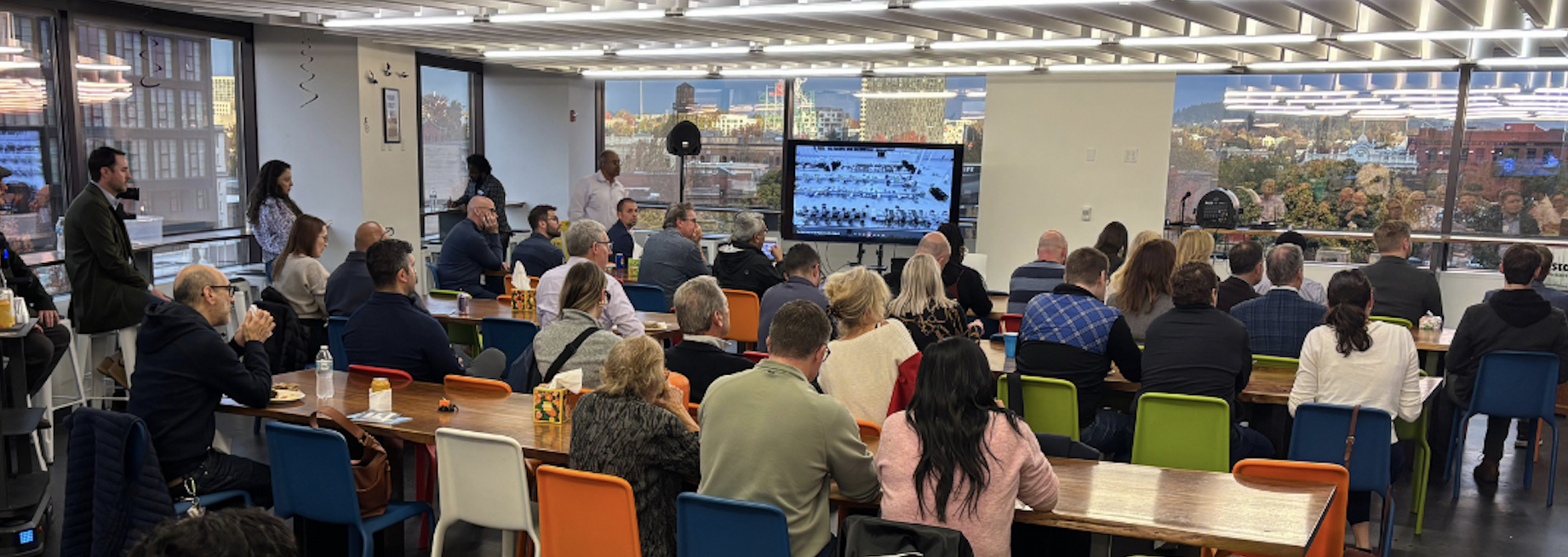
A robot serving wine is one way to get a conversation started. At TAO’s Physical AI in Practice event, it was also an introduction to a bigger question: how do we build healthcare technology around the people who will use it?
On October 29, the Technology Association of Oregon’s HealthTech Community gathered at Upstart Collective at Big Pink in Portland for Physical AI in Practice: Building for Healthcare’s Realities.
Physical AI combines artificial intelligence with systems such as robots that can sense, respond to, and act in the physical world.
The evening brought healthcare and technology professionals together for expert perspectives, panel conversations, demonstrations, and time to connect. Robots, including the friendly-faced Pepper, gave attendees something tangible to explore alongside the discussion.
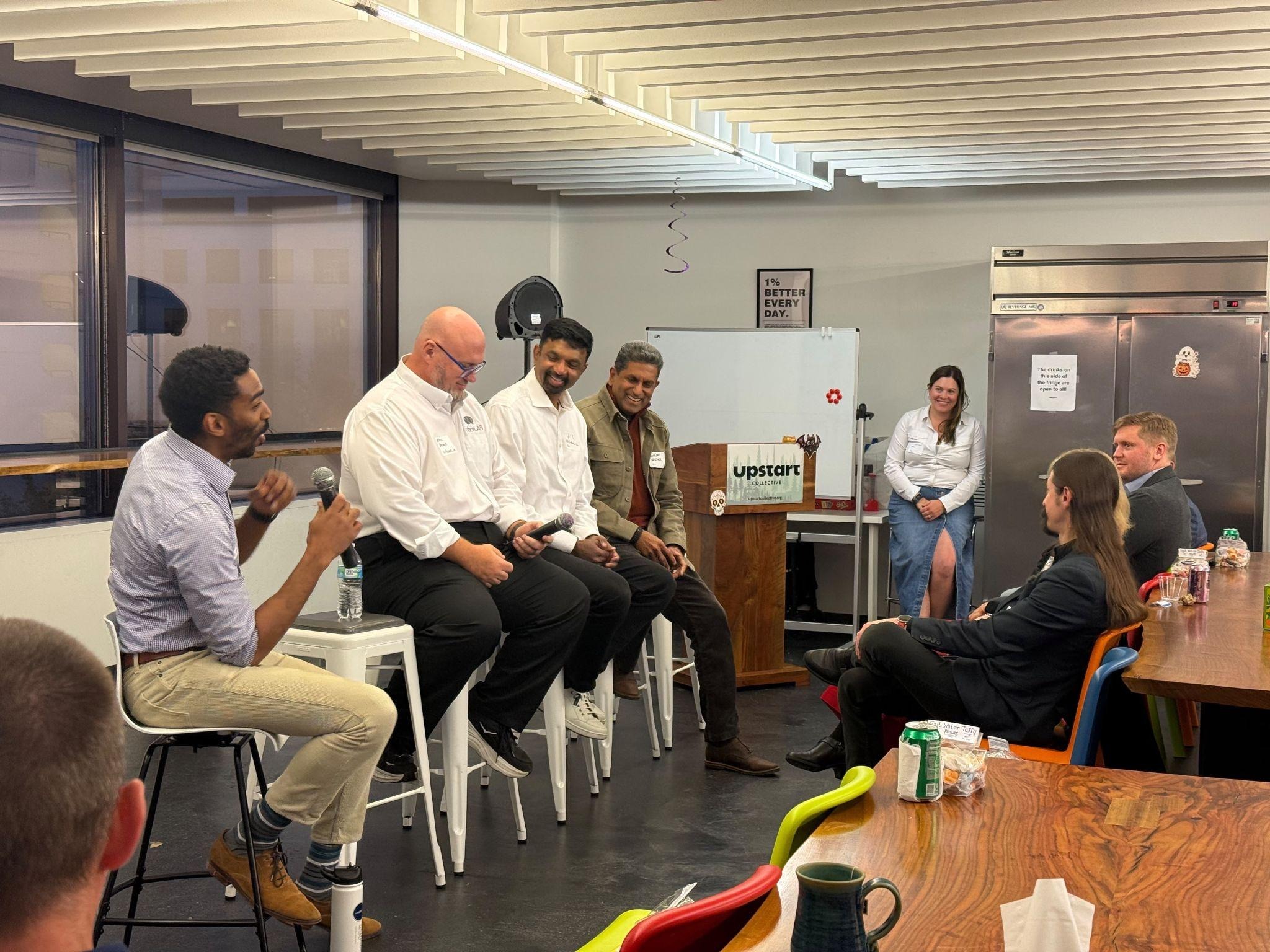
The product panel brought together Eric Arnold (RobotLAB), Vik Anantha (NAVSurgical), and Mahadev Eakambaram (Haystack Robotics), moderated by Khaleed Alston (Doctor Notes). Photo: Kadhar Mohammed.
Kristen Hura of Ratio emceed the event, welcoming guests and helping people connect throughout the evening.
Technology needs people in the plan
Physical AI touches several disciplines, and the evening’s participants reflected that range: surgical technology, dental equipment, product engineering, software development, and robotics.
For attendee Francie King, a strategic communications consultant, the theme connecting those perspectives was the human side of adoption. Her reflections emphasized managing risk, communicating clearly, and knowing who is responsible for what as technology becomes part of everyday work.
Several practical lessons stood out in her recap:
- Start with the problem and the outcome. Give the technology a defined purpose, with patient outcomes central to healthcare applications.
- Make responsibilities clear. Include the people who will use the tools and address ownership and safeguards as part of implementation.
- Communicate across disciplines. Explain the work clearly and succinctly in language that clinical, technical, and business teams can understand, then keep those conversations going.
- Recognize what lean teams can do. Small teams can adapt quickly, creating opportunities to respond as needs and technologies change.
Those themes gave a broader context to one clinical example that resonated with another attendee, Anna Ballard.
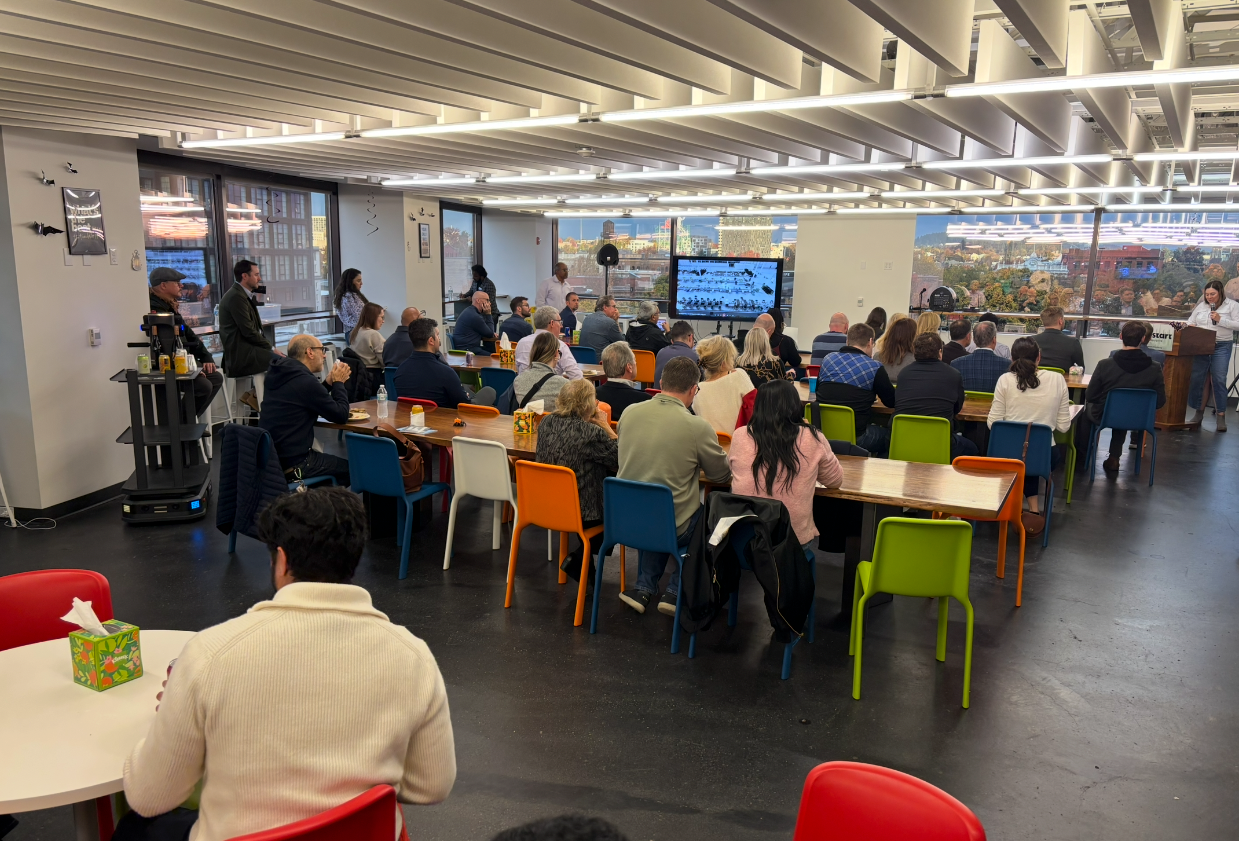
Attendees gather at Upstart Collective at Big Pink in Portland for Physical AI in Practice: Building for Healthcare’s Realities. Photo: Kadhar Mohammed.
Learning from more surgical experience
Vik Anantha of NAVSurgical discussed the progression from his previous work in surgical robotics, focused on the physical execution of surgery, to his current work exploring AI’s role in supporting surgical reasoning.
For clinician and attendee Anna Ballard, two ideas stood out: the breadth of surgical experience an AI model could learn from and the importance of preserving clinician choice.
Vik used gallbladder removal surgery, or cholecystectomy, to illustrate the opportunity. An individual surgeon develops experience through the procedures they perform. An AI model could potentially learn from thousands of cases, drawing on exposure to a much wider range of patient anatomy and variations.
The possibility he described was to bring information from that broader experience into the operating room, where it could support a surgeon working through an individual case.
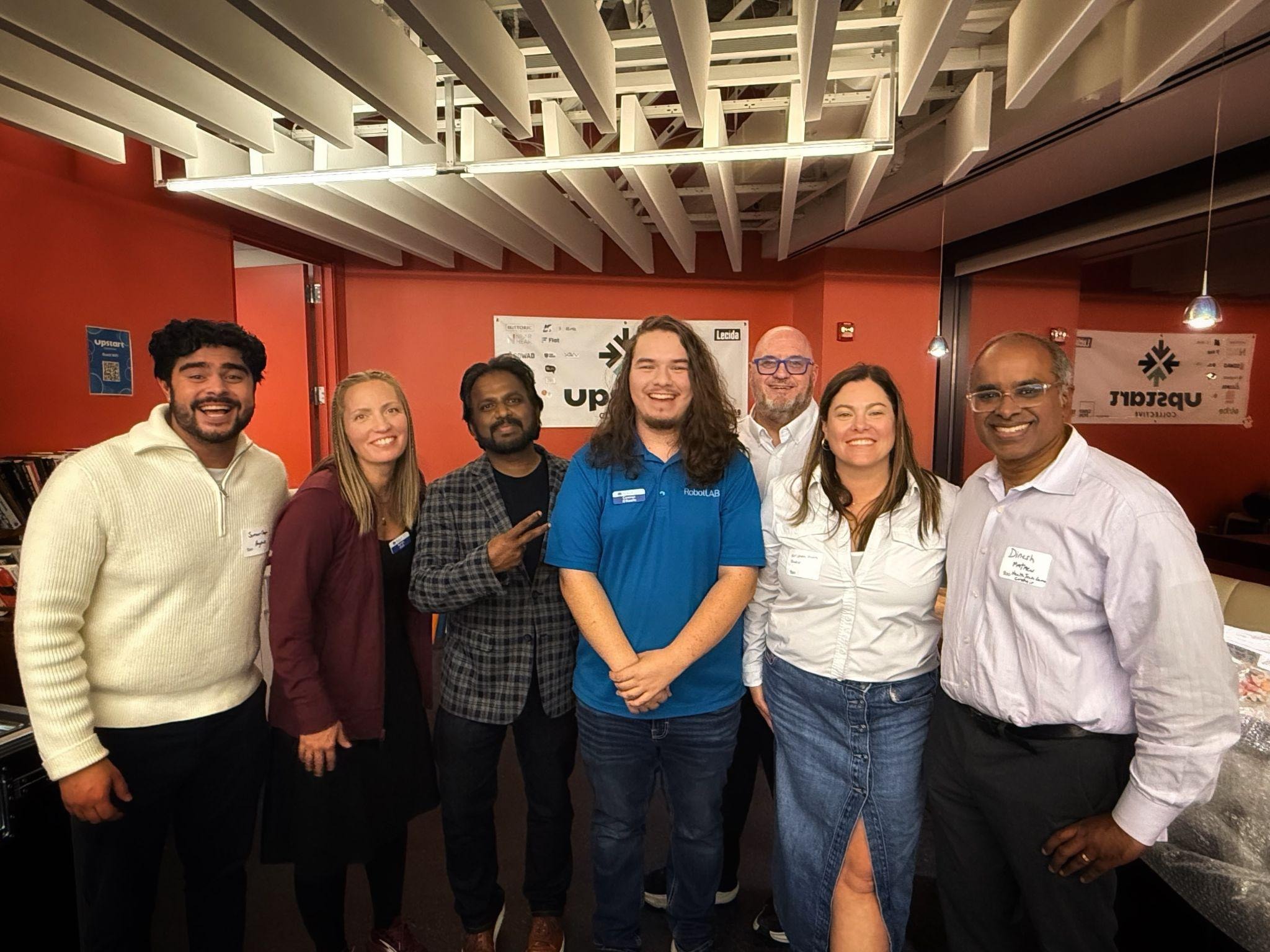
Event participants and members of the RobotLAB team gather at Upstart Collective during TAO’s HealthTech Community event. Photo: Kadhar Mohammed.
Preserving clinician choice
Just as important was the question of how a surgeon would use that information.
Vik described a vision of AI providing something like an expert second opinion during surgery. The system could offer additional information and perspective, while the surgeon would decide whether and how to act on it.
For Anna, preserving that choice was central to the value of the approach. The technology would support the clinician’s reasoning while keeping the clinician responsible for the decision.
Her reflections brought the discussion back to a shared goal for surgeons, patients, and hospitals: reducing complications and improving patient outcomes. That goal gives the technology a purpose and offers a starting point for evaluating where it could help.
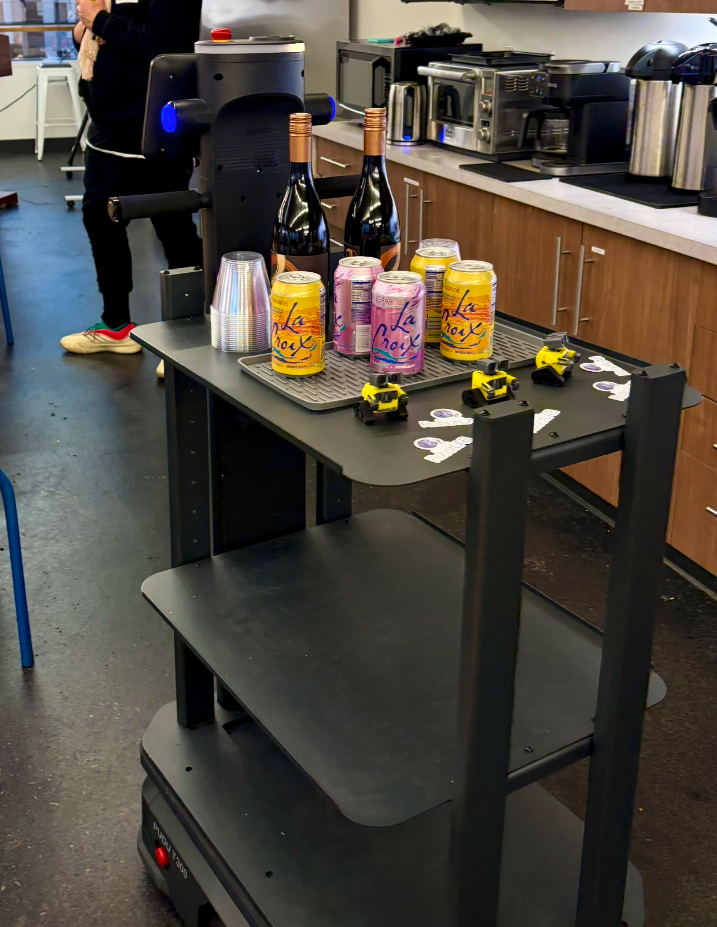
A service robot carries refreshments at Physical AI in Practice, bringing robotics into the evening’s conversations and connections. Photo: Kristen Hura.
Thank you to the people behind the conversation
Our thanks to the speakers who shared their experience and perspectives:
- Rob Ayers, A-dec
- Vik Anantha, NAVSurgical
- Mahadev Eakambaram, Haystack Robotics
- Kevin Kirkemo, EPAM
- Dorota Shortell, Simplexity Product Development
- Eric Arnold, RobotLAB
Thank you to host Josh Carter of Upstart Collective and Jameson Watts, Dean of the School of Computing and Information Sciences at Willamette University, for sharing welcome remarks and helping set the stage for the evening.
Thank you also to moderators Khaleed Alston of Doctor Notes and Vadim Manoilo of Sensobright Industries, and HealthTech Community co-chairs Ryan Williams and Dinesh Mathew for helping bring the community together.
We’re grateful to Upstart Collective for hosting, to sponsor RobotLAB and its team, including Kadhar Mohammed, for supporting the evening, and to everyone who contributed questions and perspectives.
This recap incorporates Francie King’s event observations and Anna Ballard’s clinical reflections.
Help shape what comes next
This is the kind of exchange the TAO HealthTech Community is building: a place for clinical, operational, and technology professionals to learn from one another and explore practical challenges together.
If you’re working at the intersection of healthcare and technology, we invite you to bring your experience, questions, and ideas for future conversations.
Learn more about the HealthTech Community, explore upcoming TAO events, or become a TAO member to support and participate in Oregon and Southwest Washington’s technology community.
Co-written with Francie King, strategic communications consultant, and Anna Ballard, PA-C, founder of Process to Practice.
Join our movement in the world of tech
Become a part of our mission to empower the tech community in Oregon and SW Washington.